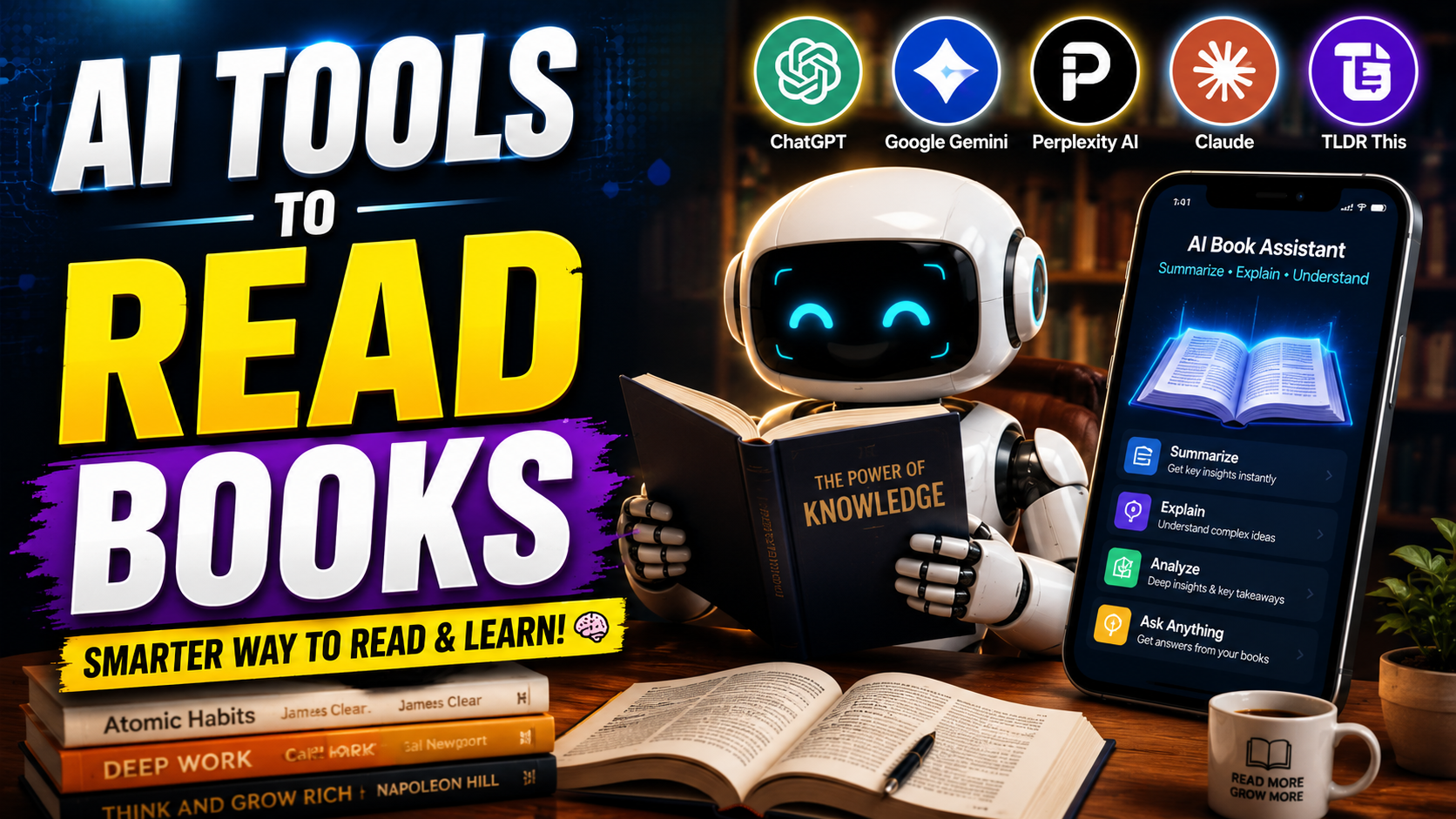
If you’ve ever stared at a growing reading list and thought there’s no way I’ll ever finish all this, you’re exactly who AI reading tools are built for. They can’t magically upload a book into your brain, but they can summarize, read aloud, explain tricky sections, and help you take better notes from books you already own.
This guide focuses on practical, legal ways to use AI with ebooks, PDFs, and scanned pages plus the limits you should know about, especially around copyrighted material and accuracy.
We’ll look at different categories of tools: AI chatbots that analyze your book, apps that turn text into audio, and readers that add smart highlights and flashcards. Expect real trade‑offs: some are great for deep study, others are better for quick overviews only.

Most examples here work on both desktop and mobile, but exact features can vary by app version, platform, and region, so treat this as a starting map rather than a final verdict.
Related Resource
The Download Now button above opens the Telegram resource connected to Google Useful Ai Tools To Read Books. Use it to join the channel or open the shared details without searching manually. LAYOUT CHECK: Keep advertisements visually separate from this CTA. Do not place an ad so close that readers may tap the ad by mistake.HUMAN EDIT: Insert site‑specific CTA block here, e.g., See our latest AI app guides or a newsletter signup focused on reading/productivity.
1. AI Chatbots That Can Read Your Book Files
Modern chatbots can accept file uploads (PDFs, EPUBs, sometimes images) and answer questions about them. This is ideal if you want to study a non‑fiction book, a research report, or a manual more efficiently.
How this typically works
- You upload a book file or a chapter (usually PDF or EPUB).
- The AI indexes the text and lets you ask questions like Summarize chapter 3 or Explain the main argument in simple terms.
- For long books, you may need to upload by sections due to file size or token limits.
Examples in this category include AI copilots built into major chat tools (such as ChatGPT with file upload, Microsoft Copilot with file support) and dedicated chat with your PDF tools. ADD SCREENSHOT: Example of a chatbot interface with a book PDF uploaded and a question like What are the key takeaways from chapter 2?
What these tools are good for
- Quick chapter summaries before (or after) you read.
- Clarifying dense academic or technical sections.
- Creating study questions or flashcards from your notes.
- Searching concepts across a whole book (Where does the author discuss neural networks?).
Important limitations and risks
- Copyright still matters: Upload only books you legally own and check your local laws and the app’s terms. Many services warn against uploading copyrighted material you don’t have rights to share.
- Hallucinations: Some models may invent arguments or quotes that don’t exist in the book. Cross‑check anything important with the actual text.
- File size limits: Very long books may exceed upload limits. You may have to split into multiple PDFs or focus on priority chapters.
- Privacy: Most tools process your files in the cloud. If the material is sensitive or unpublished, use tools with clear enterprise or local‑processing options, or avoid uploading entirely.
2. AI‑Powered Text‑to‑Speech: Let the Book Read Itself to You
Text‑to‑speech (TTS) apps aren’t new, but recent AI voices sound much more natural and support better pacing, emphasis, and even multilingual reading.
On phones and desktops, you’ll usually find three options:
- Built‑in screen readers (Android TalkBack, iOS Speak Screen, Chrome’s Read Aloud extensions).
- Dedicated TTS apps such as Speechify or NaturalReader that hook into your ebook/PDF apps.
- AI reading built into ebook apps (for example, some Android ebook readers now bundle AI voices as a premium feature).
Best cases for AI TTS
- Reading while commuting, cooking, or walking.
- Re‑listening to key chapters to reinforce memory.
- Supporting readers with visual impairments or dyslexia.
Drawbacks to expect
- Formatting issues: Sidebars, footnotes, and references can sound messy when read linearly.
- DRM walls: Some DRM‑protected ebooks (including from big stores) may block copy/paste or TTS, depending on platform rules and regional laws.
- Subscription creep: Many AI voice upgrades are tied to monthly plans. Check whether your system’s built‑in TTS is already good enough before paying.
3. Smart Ebook Readers with AI Highlights and Notes
Another group of tools keeps you inside a reading app but layers AI on top. These apps take your highlights, notes, or imported PDFs/EPUBs and turn them into summaries, flashcards, or concept maps.
Common features you’ll see across apps:
- AI‑generated chapter summaries based on your highlights.
- Automatic flashcards (question on front, answer on back) pulled from key sentences.
- Suggested questions to ask yourself after each chapter.
These tools are particularly useful for students and non‑fiction readers trying to remember what they read instead of just finishing the book and forgetting it a week later.
Things to watch out for
- Vendor lock‑in: Some apps make it tricky to export your notes or flashcards. Verify you can get your data out (e.g., Markdown, CSV, Anki format) before you build your entire reading workflow there.
- Over‑summarization: AI might aggressively compress nuanced arguments into oversimplified bullets. Use summaries as a helper, not a replacement for important sections.
- Mobile vs desktop parity: Features sometimes arrive on web first, then mobile, or vice versa. Check a recent feature list before subscribing.
4. Ask Anything Overlays for Kindle, Web, and PDFs
A growing trend is browser or system‑wide overlays that sit on top of whatever you’re reading and let you call AI on demand. Think side panels or keyboard shortcuts that:
- Summarize a selected paragraph or page.
- Explain a concept in simpler language (ELI5).
- Translate excerpts into another language.
These can work on web articles, web‑based ebook readers, and sometimes desktop readers that allow text selection.
They’re ideal for quick clarifications: you stay inside the reading flow instead of switching to a separate AI chat window, uploading files, and pasting quotes back and forth.
Common friction points
- DRM and native apps: Desktop Kindle apps or certain proprietary readers may not let overlays capture text at all.
- Shortcut conflicts: Keyboard combos used by overlay tools can clash with your OS or reader shortcuts. Most apps let you customize these worth doing early.
- Context loss: Summaries on very small selections can misinterpret the broader argument. When in doubt, select a full page or section, not just a sentence.
5. Comparing Types of AI Reading Tools
| Tool Type | Best For | Key Strength | Main Drawback |
|---|---|---|---|
| Chatbots with file upload | Non‑fiction, research, manuals | Deep Q&A on book content | Can hallucinate; file size and copyright limits |
| AI text‑to‑speech | Listening on the go | Natural‑sounding audio | DRM blocks and subscription costs |
| Smart ebook readers | Students, active note‑takers | Highlights → summaries/flashcards | Lock‑in, varying export options |
| On‑page AI overlays | Quick explanations and translations | Stay in the same reading window | May not work with all apps; context issues |
🟩 ADD REAL DETAIL: After selecting your main tool examples for this site, plug in 2 3 specific app names you’ve actually checked, with platform notes (Android/iOS/Web) and any free tier limits.
6. Practical Setup Tips and Common Mistakes
Start with one primary workflow
Rather than installing five apps at once, pick the one scenario that bothers you most:
- I want audio versions of PDFs I already have. → Try AI TTS first.
- I’m studying a complex textbook. → Start with a chatbot that supports PDF uploads plus a note‑taking reader.
- I get lost in jargon and theory. → Use overlays that explain and simplify on the spot.
Avoid these early mistakes
- Relying only on AI summaries for whole books: They’re fine for an overview but poor for deep understanding, especially with literature, philosophy, or anything where style and nuance matter.
- Uploading sensitive material without checking policies: Draft manuscripts, internal company docs, or subscription‑only research papers should be handled very carefully.
- Ignoring export options: If you build a year’s worth of highlights and flashcards in one app, migrating later can be painful. Decide early how you want your notes backed up.
Test on a short chapter first
Before moving your entire library into a new AI workflow, use one chapter or a freely available public‑domain book as a test. That gives you a realistic sense of:
- How accurate the summaries feel.
- Whether TTS voices are pleasant over an hour, not just 30 seconds.
- How easy it is to search inside the AI’s understanding of the text.
🟧 VERIFY BEFORE PUBLISHING: If you add any direct links or brand mentions, double‑check their current feature sets and file‑handling policies, especially around copyrighted ebooks.
7. FAQs: Using AI to Read Books
Can AI legally read any book I upload?
No. Copyright and licensing still apply. Generally you should only upload books you own, and you must follow both your local law and the tool’s terms of service. Many paid ebook platforms restrict copying, conversion, or automated reading.
Is it safe to study only from AI summaries?
For casual overviews, probably fine. For exams, professional work, or anything where nuance matters, treat summaries as a helper. Always verify key points in the original text.</