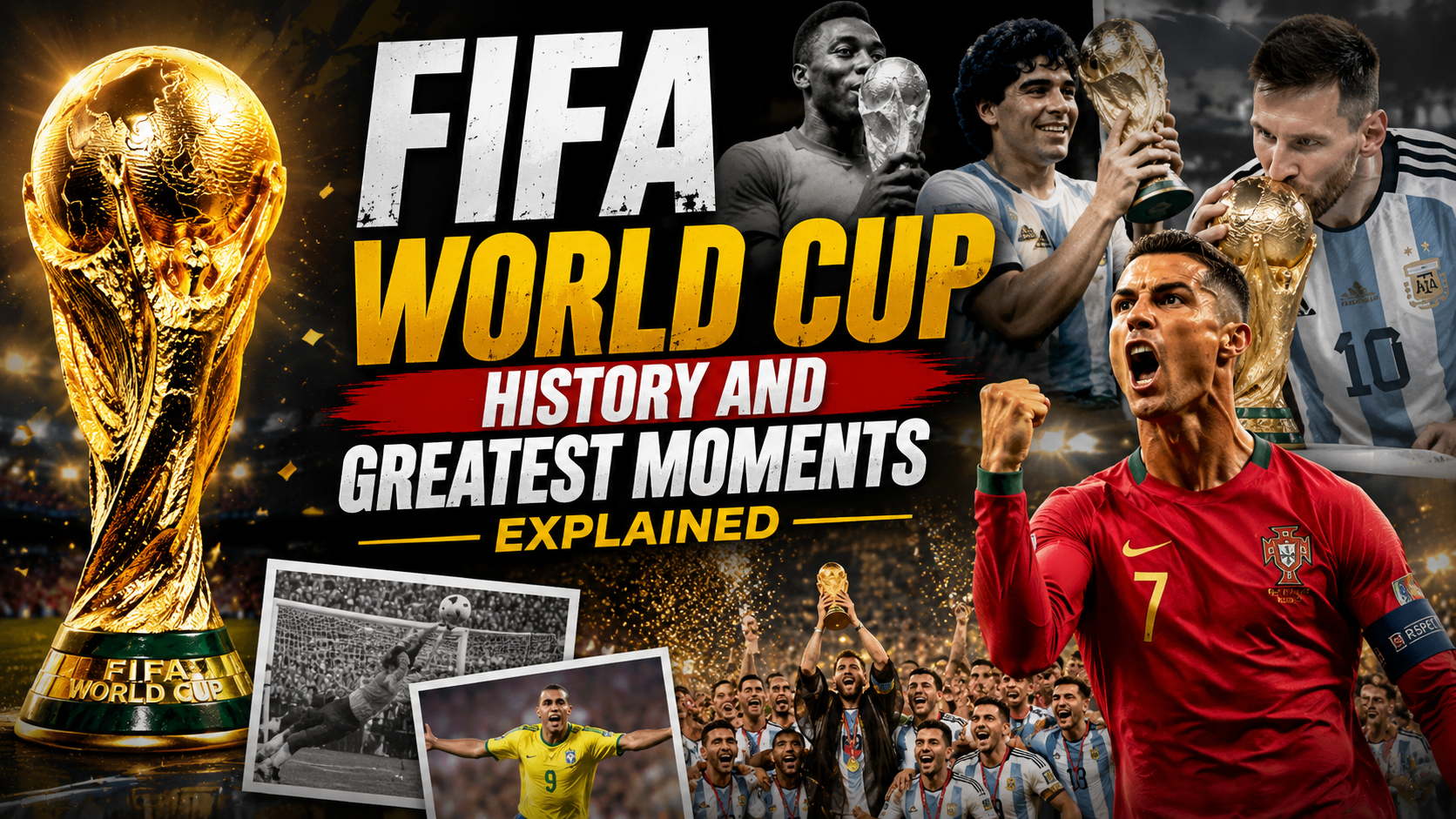
Hello friends, today we are going to try something useful with this topic and make sense of FIFA World Cup history without turning it into a dry list of dates. Many fans know a few famous finals or star players, but the full story is messy, political, emotional and often misunderstood. This guide is for readers who want the bigger picture as well as the legendary moments people still argue about.
Instead of just repeating tournament winners, we will walk through how the World Cup started, why it became so powerful, and which matches actually changed football. You will see how tactics evolved, why some teams dominated for decades, and how modern editions like Qatar 2022 fit into a story that began in 1930. We will also flag common myths and oversimplified stories that often appear on social media.
This article is written for casual fans who watch highlight clips, long time supporters who remember classic tournaments, and younger viewers who mainly know Messi, Ronaldo and Mbappe. If you are trying to sound informed in football debates, planning content for a sports channel, or just want context before the next World Cup, these timelines and examples will give you a solid base.
We will connect key eras in FIFA World Cup history with real world examples, like how Brazil 1970 influenced street football or how Germany 2014 shaped data driven tactics. Along the way you will see how politics, broadcasting, sponsorship and even stadium technology changed what fans experienced. If you run a tech or sports blog, this overview also gives you angles for deeper posts on broadcasting rights, streaming or VAR technology.
Related Resource
The Website Link button above opens the related resource for FIFA World Cup History And Greatest Moments Explained. It is included so readers can reach the mentioned page directly.
How the FIFA World Cup Began (1930 to 1950)
The first World Cup took place in Uruguay in 1930. At that time the Olympic football tournament was still considered the big prize, but professional players often could not take part. FIFA wanted its own competition that allowed professionals and generated revenue through tickets and later media rights. Uruguay hosted because it had just won Olympic gold and was willing to pay for travel costs for many teams.
Early tournaments were small. The 1930 edition had only 13 teams, mostly from the Americas and a few from Europe. Travel was by ship, schedules were chaotic and stadium safety standards were basic. This era also included the first major controversy in 1934 and 1938 when Mussolini used the Italian national team for political propaganda. These details matter because they show that the World Cup was tied to power from day one.
The First Iconic World Cup Moments
One of the earliest legendary matches is known as the Maracanazo, the shock defeat of Brazil by Uruguay in the 1950 decisive group game in Rio. Brazil only needed a draw, local newspapers had already celebrated victory and white shirts were prepared for the champions. Uruguay won 2 to 1 in front of around 200,000 people, possibly the biggest crowd ever for a football match. The loss was so traumatic that Brazil switched to their now famous yellow shirt afterwards.
Another foundational moment came in 1954, often called the Miracle of Bern. Hungary arrived as clear favorites after beating England 6 to 3 and 7 to 1 in earlier friendlies. Yet West Germany came from behind to win 3 to 2 in heavy rain. Historians often link that victory to a growing sense of national recovery after the Second World War, showing again how World Cup results can feed into bigger social stories.
Brazil, Pelé and the Rise of Global Television
When people think about FIFA World Cup history, they usually picture Pelé in a yellow Brazil shirt. Brazil won in 1958, 1962 and 1970. The 1958 tournament in Sweden introduced a 17 year old Pelé, who scored a hat trick in the semi final and two goals in the final against the hosts. These matches were among the first widely broadcast across Europe, and the World Cup started to become a shared global event rather than a regional curiosity.
Mexico 1970 was the first World Cup fully broadcast in color for many countries. The tournament produced one of the most replayed goals in football, Carlos Alberto’s finish at the end of a long passing move in the final against Italy. For modern viewers who watch short clips on phones, that goal still looks modern, quick and coordinated. It also reflected a wider shift toward attacking football and technical quality that brands loved for marketing.
Comparison of Key World Cup Eras
The tournament has changed so much that it helps to compare eras side by side. The table below simplifies key differences between four important periods.
| Era | Typical Team Count | Playing Style | Technology & Media | Common Talking Points |
|---|---|---|---|---|
| 1930 to 1958 | 13 to 16 | Physical, direct, uneven tactics | Radio, limited black and white TV | Travel issues, political influence, small pools of teams |
| 1962 to 1982 | 16 to 24 | Defensive systems, emerging flair sides | Color TV, first replays | Violent fouls, early tactical battles, superstar forwards |
| 1986 to 2006 | 24 to 32 | Balanced, more organized pressing | Global satellite TV, early internet | Hand of God, golden generation sides, commercial boom |
| 2010 to 2022 | 32 | High pressing, data driven tactics | HD and 4K, VAR, social media | Goal line tech, VAR debates, player workloads |
Greatest World Cup Moments That Changed The Game
1. Maradona in 1986, genius and controversy
Mexico 1986 provided two of the most analyzed moments in FIFA World Cup history within a few minutes. In the quarter final against England, Diego Maradona scored with his hand, known as the Hand of God, then followed it with a solo run past half the English team often called the goal of the century. This match is a case study example for how football mixes skill, cheating, politics and mythology in a single afternoon.
2. Brazil 1970, the dream team example
Coaches still use clips of Brazil 1970 when explaining attacking principles. The team used a flexible 4 2 4 that flowed into midfield, with Pelé, Jairzinho and Rivelino rotating positions. If you play or coach today, watching that final against Italy is a free masterclass in off the ball movement. The downside was that very physical defending in later tournaments partly grew as an attempt to stop that kind of flair.
3. Germany 7 to 1 Brazil, modern shock in 2014
In the 2014 semi final, a structured German side crushed Brazil 7 to 1 in Belo Horizonte. From a data perspective, analysts often list this as the clearest example of how organized pressing and preparation can expose a poorly balanced defense. For Brazilian fans it was another national trauma. For coaches it became a warning about relying only on individual talent without a stable tactical system.
4. France 2018 and the rise of analytic squads
France in 2018 blended raw pace, physical power and heavy use of performance data. Their midfield balance with Kante and Pogba, combined with Mbappe’s speed, showed a template that many national teams try to copy. The realistic drawback is that not every country can access the same sports science infrastructure. Smaller nations might study that model but still struggle to apply it over a full tournament.
Case Study: Argentina 2022 And The Pressure Of Legacy
Argentina’s 2022 win is a useful modern case study. Lionel Messi had lost finals in 2014, 2015 and 2016 and carried a reputation among critics that he only delivered for his club. In Qatar, the team was built around his strengths at age 35, with younger players like Enzo Fernández and Julián Álvarez doing much of the running.
From a tactical view, Argentina shifted shapes during the tournament, sometimes using three at the back to control wide areas. Emotionally, the story felt like a closure to the long Messi versus World Cup debate. The final against France, which ended 3 to 3 before penalties, gave neutral fans one of the most dramatic matches in tournament history. For content creators, that match alone offers breakdown opportunities on mentality, in game adjustments and penalty strategies.
How The World Cup Format Keeps Changing
One common misunderstanding is that the World Cup structure is fixed. In reality, it has already gone from simple groups and straight finals to multiple group phases and larger knockout rounds. FIFA has announced further expansion for future editions, which could mean more matches and different group formats. This can help smaller countries qualify, but may also create fixture overload and lower quality games in early stages.
For fans, a practical tip is to always check the official format for each edition rather than assuming the same pattern from the last tournament. Broadcasters, streamers and app developers who follow this niche should also adapt schedules, notifications and content plans to match any new structure.
Conclusion
FIFA World Cup history is not just about listing champions. It is a moving story of politics, media, tactics and incredible human moments. From Uruguay’s early dominance to Brazil’s flair, from Maradona’s chaos to Messi’s relief in 2022, each era reflects how football and society were working at that time.
If you want a practical way to go deeper, pick one classic match from each era discussed here and watch full replays rather than only short highlights. Notice how tempo, fouls, communication and refereeing standards evolve. That habit will make future tournaments easier to read, whether you are just watching with friends, running a fan account, or building your own sports analysis content.
FAQ
Who has won the most FIFA World Cups?
Brazil holds the record with five titles. They won in 1958, 1962, 1970, 1994 and 2002.
Which World Cup final is considered the best?
Many fans pick Argentina against France in 2022 because of the late drama and penalty shootout, while some still prefer 1986 or 1970 for their historical impact.
Why did the World Cup not take place in 1942 and 1946?
Both editions were canceled due to the Second World War. The tournament only returned in 1950 in Brazil.
What is the biggest World Cup upset ever?
Uruguay beating Brazil in 1950 and Germany beating Brazil 7 to 1 in 2014 are often mentioned. For group stages, Saudi Arabia beating Argentina in 2022 is a modern example.
How has technology changed the World Cup?
The tournament moved from radio to global TV, then HD streaming, goal line technology and VAR. These tools reduce some errors but also create new debates and slowdowns.
Who is considered the greatest World Cup player?
Pelé and Maradona are the classic answers. In recent years, many arguments focus on Messi after his 2022 win and record performances.
Thank you for reading this breakdown of FIFA World Cup history and its greatest moments. Stay connected with our blog for more latest tech news, useful apps, AI tools and smart sports viewing tips that help you enjoy every major tournament.