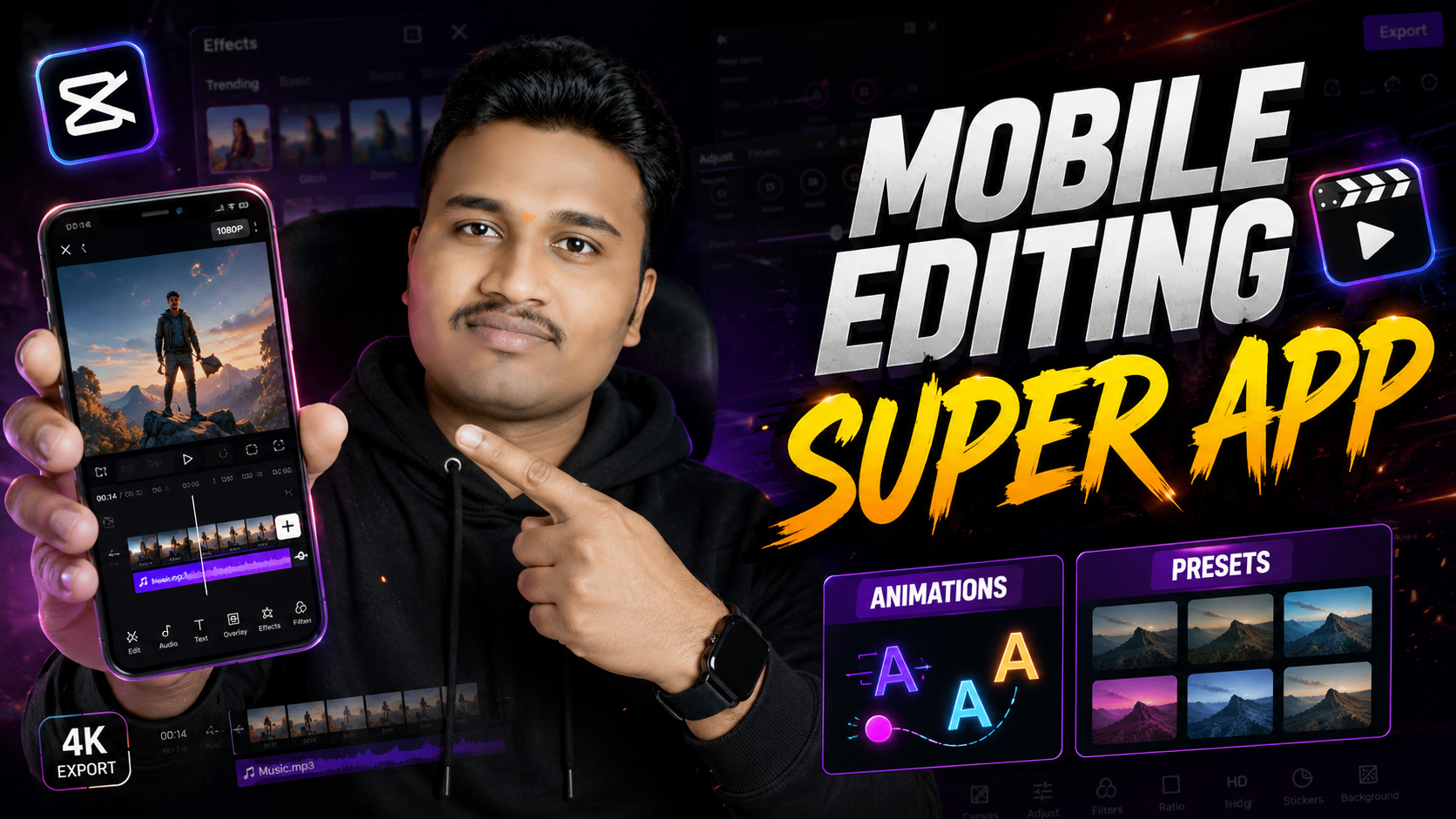
Hello friends, today we are going to look at a very practical topic, how to get those smooth effects and clean animations in your videos using a mobile editing app. Many people record nice clips but the edit looks flat, transitions feel harsh, and text just pops in suddenly. The result is that Reels or Shorts do not hold attention for more than a few seconds.
This blog will help you understand what to look for in a mobile editing app with effects and animations, and how to actually use those tools without making your video look messy. We will go through concrete examples, show where people usually get stuck, and share a simple workflow that you can repeat for each new project.
The article is for beginners and casual creators, but also for small business owners and students who need clean edits for social clips, product demos, or class projects. You do not need a powerful laptop, just an Android phone or iPhone, some free storage, and a bit of patience to test a few apps until you find the one that feels right for you.
We will also connect this topic with your daily publishing routine. That means, how to pick a main app, how to avoid heavy templates that lag on cheaper phones, and how to keep your edits consistent across TikTok, Instagram, YouTube Shorts, or Facebook. In the middle of the post you will also find a quick comparison table to help you choose the app faster.
Related Resource
The DOWNLOAD NOW button above opens the Google Play page related to Mobile Editing App Like Effects & Animations. Tap it to reach the app install page directly, so you can open the listing without searching again.
What a mobile editing app with effects and animations really does
Many apps advertise thousands of effects but only a few categories matter in daily editing. At a basic level you want three things, animated text, simple motion graphics, and transitions between clips. Extras like AI filters, motion blur, and 3D stickers are nice but not required for most content.
The important detail is how much control you get. Some apps only let you use fixed templates. Others let you adjust duration, delay, easing, and layer order. The second type needs a bit more learning but gives a more professional result, especially when you want a custom brand style.
Popular app options compared
Below is a simple comparison of four common editors that people use for effects and animations. Features can change with updates, and some tools may not be available in every country, so always check the latest details inside your app store.
| App | Best for | Key effects and animations | Watermark in free version | Learning curve |
|---|---|---|---|---|
| CapCut | TikTok and Reels, quick social edits | Auto captions, velocity edits, trendy transitions, animated overlays | Often yes, removable with login or upgrade, depends on region | Easy to medium |
| VN Video Editor | Clean edits, YouTube Shorts, travel vlogs | Keyframe animation, text presets, basic effects, speed ramps | Usually no fixed watermark on export | Medium |
| Alight Motion | Detailed motion graphics, custom text animations | Advanced keyframes, motion blur, color effects, vector shapes | Watermark on free plan | Harder but very flexible |
| InShot | Fast edits, simple ads, meme videos | Animated stickers, text animations, filters, basic transitions | Watermark and ads on free plan | Very easy |
If you are not sure where to start, a safe pattern for most users is InShot or CapCut for simple social clips, VN if you want a cleaner interface, and Alight Motion if you are ready to spend time learning motion design.
First time setup and common mistakes
When you open a mobile editing app with effects and animations for the first time, it is tempting to jump straight into templates. That often leads to cluttered edits, strange crops, and heavy exports that your phone struggles to process. A better plan is to create a simple manual project first with just three or four clips.
Check these early steps before your first real project.
- Set your canvas size to match your main platform, for example 1080 by 1920 vertical for Reels or Shorts.
- Lock the frame rate, many creators use 30 frames or 60 frames for smoother motion.
- Turn off default intro or outro watermarks if the app adds them automatically.
- Download one extra font that fits your content, for example a clean sans serif for tech tips.
A frequent beginner mistake is mixing five different fonts and color styles inside one 15 second clip. The animation can look cool in the preview but the message becomes hard to read. Try to limit yourself to one main font and two colors for text, then let motion and timing create the interest.
Basic animation workflow you can reuse
Here is a simple workflow that fits most short videos, from product demos to travel clips.
- Rough cut your clips, trim the start and end of each shot until the story flows. Do this before touching any effects.
- Add music and adjust clip length to match key beats in the sound.
- Place simple transitions between shots, for example cut on beat or a short fade. Avoid overusing spin and flash transitions.
- Add one main title animation at the beginning. Keep it under two seconds so viewers reach the content fast.
- Add supporting text near the object, not far away on the screen, and use gentle slide or fade animations.
- Finally, sprinkle one or two special effects, for example a speed ramp with motion blur or a light leak overlay.
By keeping this order, you avoid a very common problem, spending ten minutes crafting one animated text, then deleting it because the clip timing changes later.
Real world examples of smart effects use
Example one, a small cafe wants to promote a new drink on Instagram. They record three shots, pouring, foam art, and a close up of the final cup. In the editor they add a short zoom in transition between clips, one animated price tag that slides in from the right, and a bounce animation for the call to action at the end. No extra stickers, no random glitch, and the result looks clear and intentional.
Example two, a student makes a project recap for class. They import screen recordings, add a vertical blur background, then use animated arrows and highlight circles to draw attention to important parts of the screen. Instead of using ten different filters, they keep colors natural and add only a light shake effect to emphasize one key moment. That keeps the viewer focused on the information, not on the editor.
Case study style workflow, weekly Reels for a local shop
Imagine a local clothing store that wants to post one Reel every week without hiring an agency. They choose a mobile editing app with effects and animations that runs well on a mid range Android phone, for example CapCut or VN. The owner records simple vertical clips on the shop floor, new arrivals, customers trying outfits, and quick mirror shots.
Each Monday, they follow a fixed template. They drop all clips on the timeline, remove audio from the noisy ones, add a royalty free track from inside the app, then apply the same color filter they used last week. They use identical text animations for price tags and size details, and a repeated closing animation with their handle and address. After a month, their feed looks consistent and editing time drops to about twenty minutes per clip.
The lesson here is that the real power is not in having hundreds of effects, but in choosing a small set and reusing them so that your brand feels familiar. This also lowers the risk of the app crashing or freezing, because you avoid stacking too many heavy animations on a single shot.
Privacy and safety checks before you export
Some editors ask for account login, cloud templates, or access to your contact list. Before you grant permissions, read the overview on the store page and check what data the app says it collects. If an editing tool wants access to things that do not match its purpose, consider another option or limit permissions in your phone settings.
Also be careful with in app music and templates that include brand logos. Not every track or graphic is safe for commercial use. If you plan to boost your video as an ad or use it on a company page, look for music and assets that are clearly marked as allowed for commercial projects inside the app.
Conclusion
A good mobile editing app with effects and animations should help your story, not distract from it. Focus on three main areas, clean text motion, simple transitions, and a few well chosen special effects. Start with an app that matches your skill level, practice one reusable workflow, and only then explore more advanced tools like keyframe animation or motion blur.
If you already have a favorite editor installed, try making your next video with half the number of effects you used last time, but pay more attention to timing on the music beat and clear text placement. You will often see a bigger improvement from those basics than from any new trendy filter.
FAQ
Which app is best for beginners?
InShot and CapCut are usually friendliest for beginners, with ready text animations and easy timelines. Both have free versions, just check the current watermark rules before posting.
Do I need a powerful phone for animated edits?
Simple effects work fine on most recent budget phones. Heavy motion blur, 4K timelines, and long projects can feel slow, so keep clips short and close other apps while exporting.
How many effects should I use in one short video?
As a starting rule, one main title animation, one or two transition styles, and one special effect is enough for a 15 second clip. Too many different styles make the video look chaotic.
Can I remove watermarks without paying?
Some apps allow free export without watermark, others do not. Avoid unofficial mods or patched APK files, they can be unsafe and violate platform rules. Instead, pick a legit free app or budget for a low cost subscription.
Is it better to use templates or edit manually?
Templates are fine for speed but often look generic. Manual edits take longer at first but give you control over pacing and style. Many creators mix both, a simple base template plus manual tweaks.
Thank you for reading. If you found this guide useful, stay tuned to this blog for more updates on mobile tech, helpful apps, AI tools, and the latest digital trends that can improve your daily workflow.