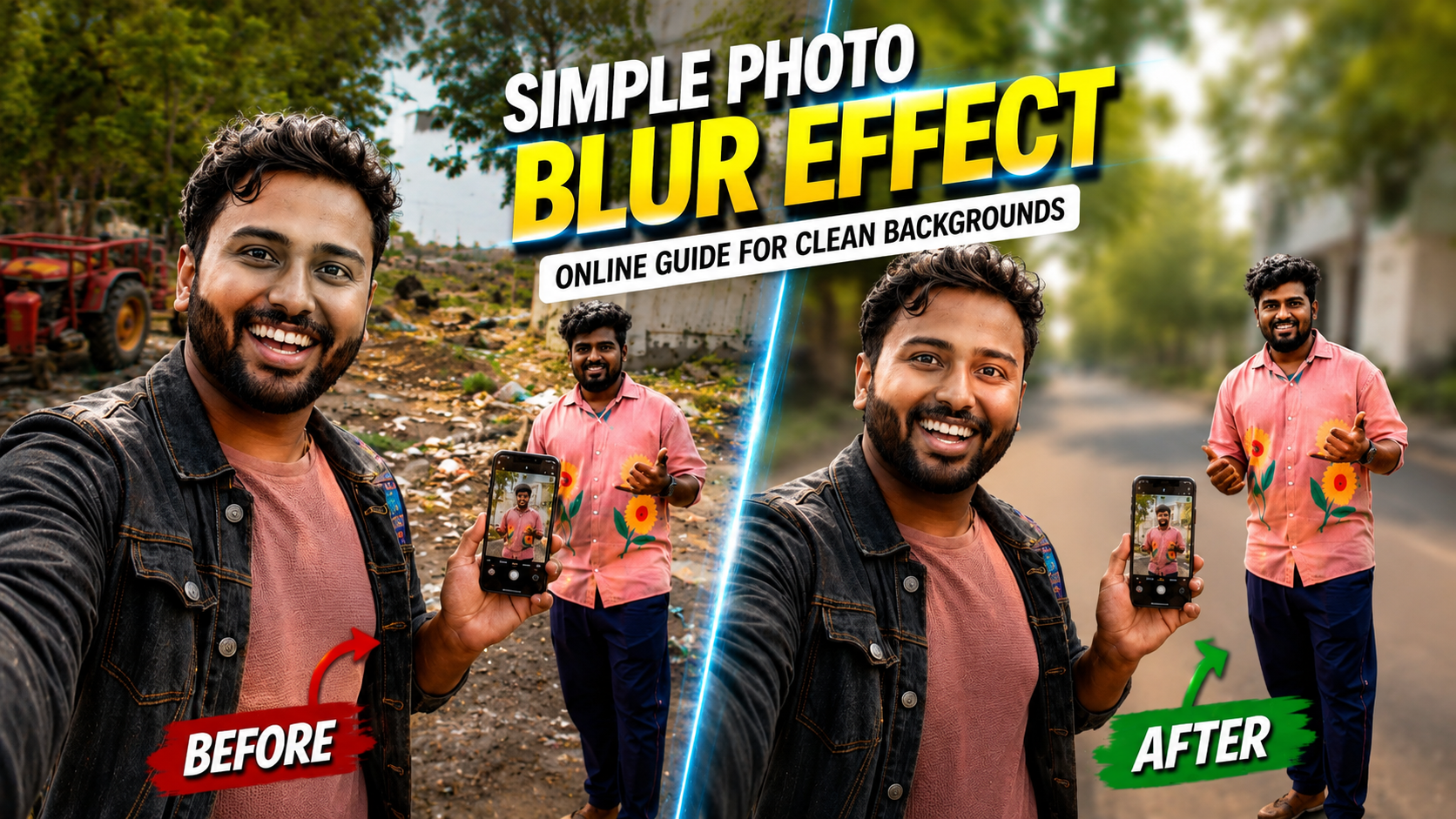
Hello friends, today we are going to try something very practical, how to use a photo blur effect online to fix busy or messy backgrounds. Maybe you took a nice selfie but there are people behind you, or your room is not clean, or you just want a softer background look. A clean blur can fix many of these problems without learning heavy editing software.
This blog will help you understand what type of blur to use, which browser tools are worth trying, and what small settings matter for a natural result. You will see step by step workflows, common mistakes to avoid, and some real examples like hiding license plates or blurring only faces in a group photo. The aim is simple, faster edits with fewer ugly results.
The guide is written for beginners who only have a browser on a phone, tablet, or laptop and do not want to download large apps. It is also useful if you already know photo editing but want a quick online option for one or two images. You do not need a graphics tablet or any designer skills, only a little patience when you mask your subject.

We will mostly focus on web based tools like Pixlr, Fotor or Canva type editors. These tools usually have a blur slider, brush or background selection feature that works well enough for social media and basic privacy tasks. When the article mentions tools, always open them from the official website or app store to avoid strange copies or unsafe download links.
Related Resource
The Website link button above opens the related resource for Photo Blur Effect Online. It is included so readers can reach the mentioned page directly.

What People Mean By Photo Blur Effect Online
When people search for a photo blur effect online they usually want one of three things. First, portrait style background blur where the face is sharp and the backdrop looks soft similar to phone portrait mode. Second, privacy blur for things like number plates, documents, or kids faces. Third, creative blur for thumbnails or posters where only text or a logo is clear.
Modern online editors sometimes call this bokeh, background blur, lens blur, tilt shift, Gaussian blur, or simply blur. The names vary but the idea is that some areas of the image lose detail so that the viewer looks at the sharp part. Good blur feels soft and natural. Bad blur has hard edges or strange halos around the subject which looks very fake.
Online Tools That Work Well For Blur Effects
There are many browser tools, but a few are better for quick blur editing. The details below are general, features can change with updates, and some options might need a free signup.
| Tool | Best For | Blur Options | Free Use Limits |
|---|---|---|---|
| Pixlr E | Manual background blur and detailed masking | Blur filter, brush, layer support | Ads, some advanced features locked |
| Fotor | One click portrait blur and quick privacy edits | Portrait blur, tilt shift, region select | Resolution limits in free plan |
| Canva style editors | Social media posts and thumbnails with text | Background blur slider, masks, templates | Account needed, some assets paid |
| Simple blur websites | Fast blur on whole image or rectangle | Box blur or mosaic area blur | Usually free with few controls |
Avoid random sites that ask you to install unknown browser extensions just to blur a photo. A normal online editor should run inside the page using the file you upload and then allow you to download the edited image.
Basic Workflow To Blur The Background Only
This is the most common request. You want to keep a person or object sharp and soften everything behind them using a browser editor such as Pixlr E or Fotor. The steps below follow a generic layout, the exact labels can be a bit different in each tool.
Step by step background blur
- Open your chosen editor in a browser and tap Create new or Open image, then upload your photo from gallery or computer.
- Check the image resolution. If it is very large, consider resizing slightly so the editor works smoothly, especially on older phones.
- Duplicate the main layer. One layer will stay sharp for the subject, the copy layer will be blurred for the background.
- Select the top layer and apply a blur filter. Start with a low value and slowly increase until the background looks soft but still recognizable.
- Add a mask to the blurred layer. Use a soft brush to paint black on the subject area which reveals the sharp layer below.
- Zoom in when painting edges around hair, fingers, and clothes. Use a smaller brush here to avoid a cut out look.
- Toggle the mask on and off to see if any parts of the subject are still blurred by mistake and refine the mask as needed.
- Export the image as JPG or PNG with the highest quality setting that your use case allows. For social media, medium high is usually enough.
This mask based approach might feel slow the first time, but once you understand it, you can quickly reuse the method on many photos with more control than simple auto blur buttons.
Real World Examples You Can Try
Example 1, Fixing a crowded street selfie
Imagine you have a selfie from a busy market. The problem is not the lighting, it is the ten people behind you and several shop signs. Upload the image to a browser editor, duplicate the layer, blur the top layer, and mask back only your face and upper body. The crowd will still be there but very soft, your expression becomes the main focus.
Example 2, Hiding private information on a document photo
Many people share screenshots of bills or tickets without thinking. With an online blur tool, you can quickly draw a rectangle blur or use a brush just over the sensitive lines like phone numbers or address. In this privacy case, it is safer to use stronger blur or even mosaic so that text cannot be recovered easily.
Mini Case Study, Cleaning A Product Photo Background
Consider a small online seller who takes product photos on a table at home. The items look good but the background shows random kitchen items. Instead of buying a studio setup, they upload each image to a browser editor and apply a background blur effect online.
The seller first cuts the image slightly to remove the worst clutter. Then they duplicate the layer, blur the top layer to a medium level, and slowly mask back only the product and a small shadow below it. After a few tries, they find a blur value that hides details like bottles but keeps enough shapes so the product does not float on a blank space.
The first mistake they made was using maximum blur. The result looked like a cheap cutout sticker. By reducing blur strength and using a soft mask edge, the photo started to look more like something shot with a large camera lens. This is a good reminder that subtle blur usually looks more professional than extreme blur.
Common Mistakes With Online Blur Effects
- Over blurring the background This makes the subject look pasted on top of the scene. Try to keep some texture visible.
- Hard edges around hair Many beginners use a hard brush. Switch to a soft brush near hair and transparent items like glass.
- Blurring the face by accident When you use auto selection tools, always zoom in and check if parts of the face or eyes are slightly blurred.
- Low resolution exports Some free tools reduce the final resolution. If you plan to print or zoom, check the export settings and pick the highest free option.
- Uploading sensitive photos to random sites For private documents or children images, prefer trusted editors and avoid sharing the file anywhere you do not understand.
Conclusion
Using a photo blur effect online is one of the fastest ways to rescue an otherwise good picture. With a browser editor, a blur filter, and a simple mask, you can guide attention to your face, product, or message while hiding distractions and private details.
If you are a complete beginner, start with a single selfie and use a tool that has a clear background blur option. Once you are comfortable, move to manual masking for more control. Always keep an eye on edges and do not rush the export quality settings. A few careful edits usually look far better than heavy one click filters.
From social media creators to small shop owners, this workflow fits many use cases as long as you respect privacy and choose safe websites. Keep practicing on different types of images and soon blur will become a natural part of your regular editing routine.
FAQ
How can I blur a photo online without creating an account
Look for editors that allow direct upload and export. Simple blur tools and some advanced editors offer guest mode, though features and resolution might be limited.
Is online blur enough to protect private text
Strong blur or pixelation over the full text area is usually fine for social sharing. Do not use a very light blur. If data is highly sensitive, avoid uploading at all.
Which format should I use after adding blur
For most social networks, JPG with high quality is good. For graphics with text or transparent backgrounds, PNG is a better choice.
Can I remove blur from an image later
No, real blur is not reversible because detail is lost. Always keep a copy of the original photo before applying heavy blur.
Why does my blurred photo look grainy after upload
Many platforms compress images. Start from a higher quality export and avoid extreme editing. Slight noise reduction before blur can also help.
Thank you for reading this guide. Stay connected with our blog for more latest tech news, useful photo apps, AI tools, and simple editing workflows that save your time.