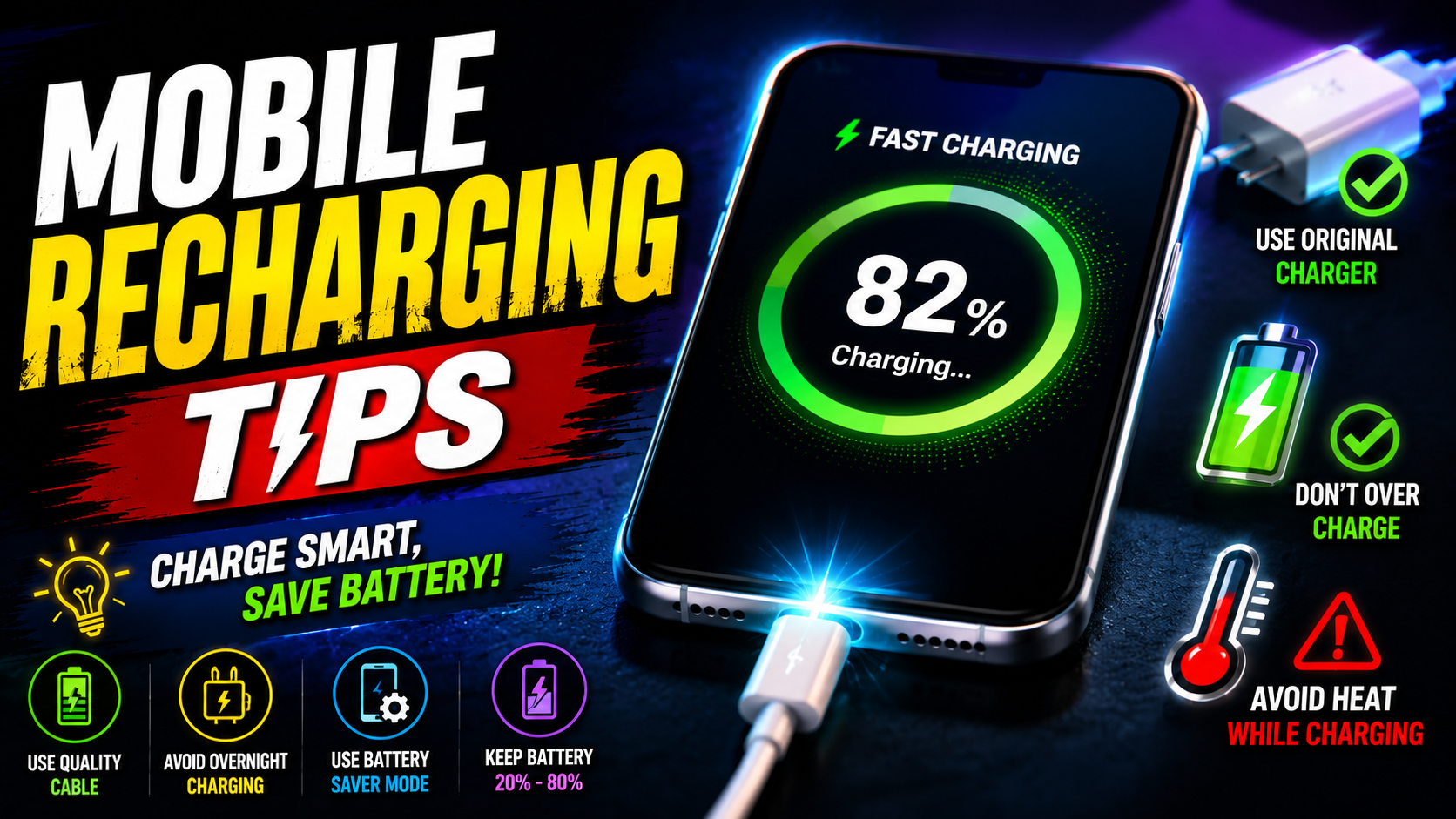
Hello friends, today we are going to try something useful with this topic of mobile recharging tips. Many people recharge in a hurry, tap the first plan they see, and later realize the data finished early or outgoing calls stopped at a bad moment. A little planning can avoid that stress and keep your number active with less money wasted.
This article will help you build a simple routine for mobile recharge, whether you use prepaid or pay as you go style plans. You will see how to compare plans properly, use UPI and wallet apps safely, and avoid common mistakes like recharging the wrong number or picking the wrong pack for your real usage. The goal is practical, repeatable steps, not just theory.
The tips here are for everyday users, parents recharging family numbers, students on tight budgets, and small business owners who rely on their phones for customer calls and messaging. You do not need advanced technical knowledge. If you can use a basic recharge app or website, you can use these ideas to stretch your balance and keep your connection stable.
Many people now recharge through telecom apps, banking apps, UPI apps and third party recharge platforms. Each tool has its own offers, cashbacks and risks. We will look at how to choose between them, what to double check before payment, and how to keep a simple record so you are not surprised when validity ends or auto renewal fails.
Related Resource
The Download Now button above opens the Telegram resource connected to Mobile Recharging Tips. Use it to join the channel or open the shared details without searching manually.

1. Know your real usage before you recharge
The smartest mobile recharging tips start before you open any app. You need a clear idea of what you actually use in a month. Many users pay for big data packs even though they are connected to home or office Wi Fi most of the day.
Check usage inside your phone
- On most Android phones, open Settings then Network or Mobile data then see data usage for current cycle.
- On iOS, open Settings then Mobile or Cellular and check current period usage.
- Note average daily data plus number of minutes you really call using the mobile network instead of internet calling apps.
Repeat this check for at least two billing cycles. If you use 2 GB per month, there is no benefit in buying a 2 GB per day plan just because it is promoted at the top of the app.
2. Compare packs by cost per day, not just headline data
Operators highlight total data and free calling, but you should compare cost per day and cost per GB. A slightly higher one time recharge can be cheaper per day when you check carefully.
| Plan type | Validity | Approx price | Data benefit | When it suits you |
|---|---|---|---|---|
| Daily data pack | 28 days | Medium | Fixed GB per day | Regular heavy users who stream daily |
| Data booster | Short term | Low | One time lump sum data | Temporary need like travel or exam prep |
| Long validity base plan | 56 to 90 days or more | Higher | Moderate total data and calls | Stable everyday use, fewer recharges |
When you see two packs with similar price, divide price by number of validity days. The lower number per day is normally the better value, as long as the data amount fits your pattern.
3. Use official and trusted apps for payment
For safety and reliable refunds, try to recharge through these options first: the official operator app, your main bank app, or well known UPI apps. These usually fetch the latest plan list from the operator servers and reduce the chance of outdated or discontinued packs.
Be careful with random recharge websites or links received on messaging apps. Some may show misleading pack names or ask you to pay through unknown payment gateways. If a new site offers extremely high cashback with no clear terms, treat that as a warning sign.
Quick safety checks before you pay
- Confirm you are on the correct operator and circle or region selection.
- Check that plan details on the recharge app match the plan description on the official operator website.
- Look for secure payment marks inside your UPI or banking app, and avoid saving card details on random third party portals.
4. Avoid the classic mistake of recharging the wrong number
Recharging the wrong mobile number is a painful but common mistake. In many regions, operators cannot reverse such transactions easily once the recharge is applied. One distracted tap can waste a full month budget.
Simple habits reduce this risk:
- Save your own number and family numbers in contacts with clear labels like My SIM 1 Data or Dad main number.
- When you paste a number, read it slowly, including the last four digits, before you press pay.
- If the app supports it, create a favorite or nickname list, and always select from that list instead of typing a fresh number.
5. Plan for validity, not just for data
Many prepaid packs now separate service validity from data packs. Some users keep buying small data add ons without noticing that base validity for calls and SMS is ending. After that date, outgoing calls can stop even though data booster is still visible.
Whenever you buy an add on, open the operator app and confirm two things, main account validity date and remaining data or talktime. If validity is about to expire, consider a combined pack that extends both, instead of stacking multiple short boosters that only handle data.
Case study style example
Imagine a student named Ravi who uses Wi Fi inside the hostel but needs strong mobile data on weekends and while traveling. At first he was buying a popular daily data plan with heavy allocation he never finished. After checking usage for two months, he switched to a long validity low data plan plus an occasional weekend booster. His total monthly spend dropped, and he no longer saw mid month low balance alerts.
6. Use offers and cashback, but read the fine print
UPI and wallet apps often give offers like a small cashback on recharge or scratch cards for rewards. These are helpful if you were already planning that recharge. They are not helpful if you buy bigger or extra packs just to chase a reward.
Check conditions like minimum amount, limited number of times per user, and time bound offers. Sometimes the reward is wallet credit that can be used only on the same platform, not real bank money. Treat it as a bonus, not as the main reason to pick a pack.
7. Keep a simple recharge log for multiple numbers
Families and small businesses often manage three to ten numbers. It becomes hard to remember who recharged when, which plan they used, and when validity ends. Instead of relying on memory, maintain a small recharge log.
You can use a basic notes app or spreadsheet with columns: number, operator, date of recharge, pack name or benefits, amount, and next expiry date. Spend five minutes each week to update it. This helps you schedule recharges slightly before expiry, instead of getting urgent calls from someone whose outgoing stopped suddenly.
8. Real world example, small shop owner using two SIMs
Consider a shop owner using one SIM for business calls and UPI, and another SIM mainly for mobile data and personal apps. If both numbers are mixed with random short packs, the costs become confusing. A better approach is to give each SIM a clear role.
For the business SIM, that person can choose a reliable unlimited call pack with modest data so customers always reach the number. For the data SIM, they can choose a data heavy pack with less focus on voice. By separating roles, it becomes easier to track recharges and avoid overpaying for unused benefits on each line.
Conclusion
Smarter mobile recharging is mostly about awareness and small habits. When you understand your real usage, compare plans by cost per day, and always use trusted apps, you cut down wasted balance and reduce the chance of sudden disconnection.
Create a basic routine, check data and validity once a week, keep a favorite numbers list, and maintain a short recharge log if you handle multiple SIMs. These mobile recharging tips will not just save money, they also make sure your number is ready when you actually need it for calls, messages, or banking alerts.
FAQ
Which app is best for mobile recharge?
Use the official operator app or your main bank or UPI app first, then consider trusted recharge platforms. Choose the one that shows clear plan details and has a simple refund process.
How early should I recharge before expiry?
Recharging one or two days before expiry is usually safe. Some systems add the new pack only after the current one ends, so you do not lose remaining validity.
Is auto recharge a good idea?
Auto recharge is helpful if you use the same pack every month and have stable income. If your usage changes often or you experiment with plans, manual recharge provides better control.
What should I do if I recharged the wrong number?
Immediately contact the recharge platform support and your mobile operator support. In many regions reversal is difficult, but quick action is still your best chance.
How can I reduce data usage before my next recharge?
Disable background data for non essential apps, lower video streaming quality, use Wi Fi for updates, and turn off mobile data when you are not actively using it.
Thank you for reading this guide. If you found it helpful, keep following this blog for more latest tech news, useful apps, AI tools, and practical mobile tips and updates.