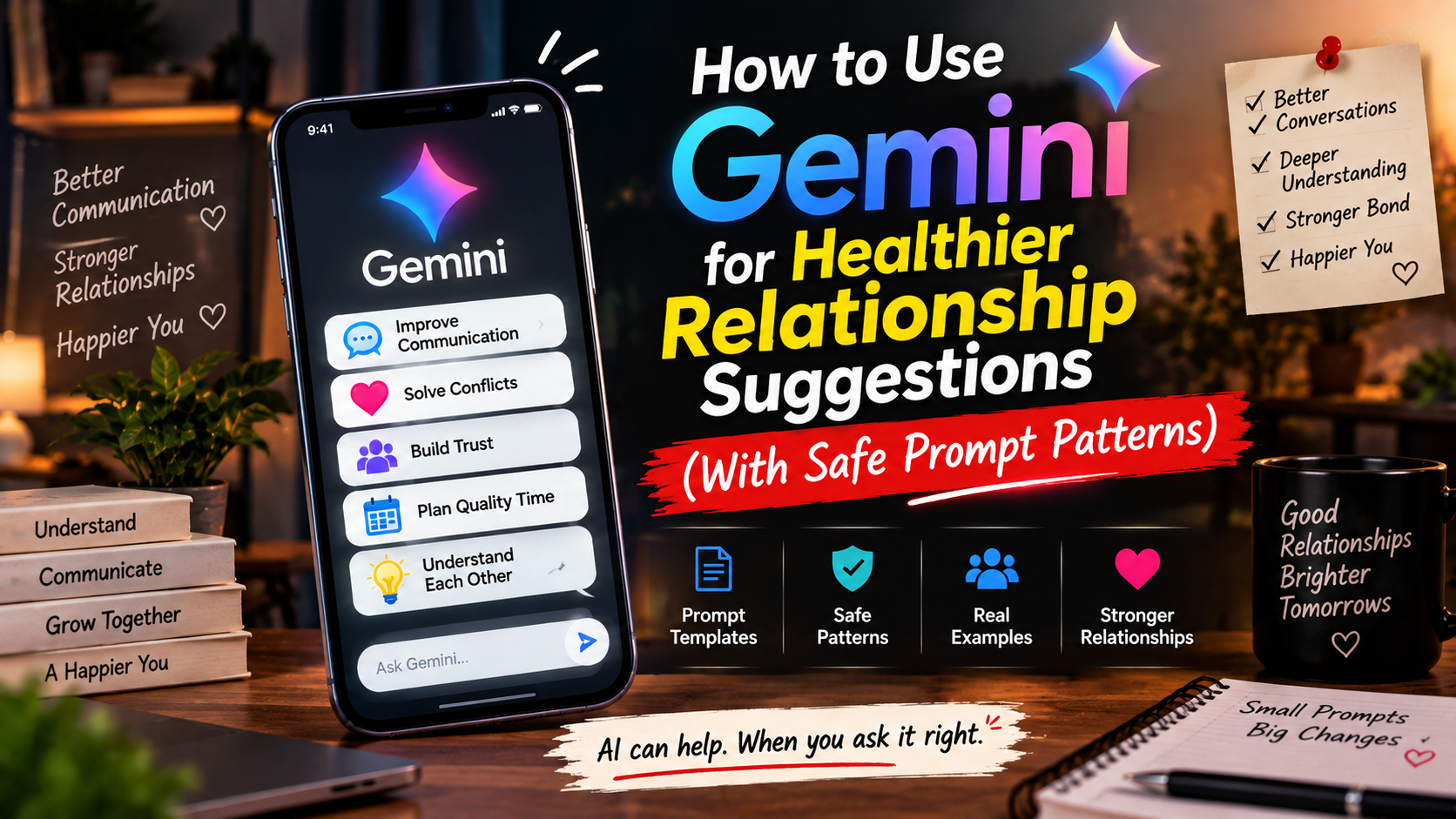
Typing How strong is my relationship? into Gemini and hoping for a score out of 10 is a fast way to get vague or unhelpful answers. The tool isn’t a therapist, it doesn’t know your partner, and it can’t measure love. But it can help you think more clearly about patterns, needs, and next steps if you ask in the right way.
This guide walks through practical, policy safe ways to use Gemini as a reflection aid: prompt patterns, examples, and boundaries that keep your privacy and mental health at the center.
The Real Use Case: Clarity, Not Relationship Scores
Most readers with this topic in mind are trying to do at least one of these:
- Figure out if a conflict means the relationship is weak or strong.
- Prepare for a difficult conversation and avoid a fight.
- Understand their own communication mistakes.
- Check whether a situation might be unhealthy or crossing boundaries.
Gemini is best used for:
- Perspective: alternative ways to interpret a situation.
- Language help: drafting calm, non accusatory messages.
- Checklists: questions to reflect on your needs and your partner’s needs.
- Education: basic concepts like active listening, love languages, attachment styles (with sources you can double check).
What it shouldn’t do:
- Diagnose your partner or you.
- Tell you to stay or leave in serious cases.
- Replace professional support in abusive or high risk situations.
A Simple Prompt Pattern for Relationship Suggestions
Instead of Is my relationship strong?, use a short pattern that gives Gemini context and a goal:
Basic pattern:
Help me reflect on [type of situation] with my [partner / spouse / friend]. Here’s what happened: [concrete description, without names or personal identifiers]. My main question: [what you want clarity on]. Please answer in [style: short bullets / a calm message draft / reflection questions].
This pattern works because it:
- Focuses on one situation, not your entire relationship history.
- States your main question instead of fix everything.
- Tells Gemini the format that’s most useful for you.
Prompt Templates for Common Relationship Questions
Below are reusable, editor safe templates you can adapt. Avoid including full names, exact locations, or private details.
1. When You Want to Check Communication Strength
Template:
Help me evaluate the communication pattern in this relationship situation. Here’s what happened: [describe what each person said and did, focus on words and timing]. What I want to understand: How might my words have felt to the other person? How might their words have felt to me? 3 specific changes I can make next time to communicate more clearly without blame.
Why this helps: Gemini can’t rate relationship strength, but it can highlight behaviours that either build trust (listening, clarifying) or erode it (interrupting, name calling).
2. When You Feel Distance Growing
Template:
I feel more distance with my partner lately and I’m not sure how to approach it. Context: [short description of changes: less time together, more arguments, big life stress, etc.]. My goal: reconnect without pressuring them. Please give me: 5 gentle conversation starters that focus on my feelings, not blame. 3 suggestions for small actions I can take this week that show care without being intrusive.
Tip: Ask Gemini for options, not a script to follow blindly. Keep what matches your values and your partner’s personality, discard the rest.
3. When You’re Unsure If a Pattern Is Healthy
Template:
I want to reflect on whether this ongoing pattern in my relationship is healthy. Pattern: [describe recurring behaviours, not labels like they’re toxic]. My feelings: [how it affects your mood, sleep, sense of safety]. My question: What are some general signs that a relationship pattern might be unhealthy? Which of those signs, if any, match what I described? What kind of professional or trusted support could I consider talking to about this?
Important: Gemini’s answer should be treated as information to consider, not a verdict. If you feel unsafe or controlled, jump directly to real world support (friend, family member, hotline, therapist, or local service).
4. When You Want to Strengthen a Good Overall Relationship
Template:
My relationship is mostly positive, and I want to actively strengthen it. Current strengths: [what you two already do well]. Areas we could improve: [time together, conflict resolution, intimacy, shared goals, etc.]. Please suggest: 5 weekly habits or rituals that couples often find helpful in building connection. 3 reflection questions we could both answer to better understand each other’s needs.
This steers Gemini away from crisis mode and into maintenance and growth ideas: regular check ins, shared hobbies, or gratitude habits.
Common Prompt Mistakes That Lead to Weak Answers
Many disappointing answers come from weak prompts, not from the tool itself. Watch out for these mistakes:
- Asking it to read minds: Prompts like What is my partner really thinking? invite guesswork. Better: What are a few possible reasons someone might react this way, and how can I check gently instead of assuming?
- Using only labels: My partner is lazy and selfish gives almost no usable data. Describe behaviours instead: They often cancel plans last minute and rarely initiate time together.
- Fishing for reassurance: Tell me my relationship is strong encourages flattery, not honesty. Ask for patterns and options instead.
- Oversharing sensitive details: Dumping private chat logs or identifiable info is a privacy risk and rarely needed to get a useful answer.
Safety, Boundaries, and Privacy When Using Gemini
Relationship topics are deeply personal. Before you treat Gemini as a sounding board, consider these boundaries.
1. Limit Identifiable Information
- Use initials or roles (my partner, my friend), not full names.
- Avoid addresses, workplaces, or exact schedules.
- Don’t paste entire private chats; summarise the key parts instead.
2. Don’t Treat Gemini as Emergency Support
In situations involving threats, self harm, violence, or control, you need human help, not prompt tweaks. Most AI tools will also remind you of this.
- Contact local emergency services if anyone is in immediate danger.
- Reach out to local hotlines or professional support services in your region.
- Talk to someone you trust offline who can understand the context better than any AI.
3. Be Skeptical of One Size Fits All Advice
AI tends to average out advice. It may assume cultural norms that don’t match your background, identity, or values. Use its output as rough ideas, not rules to follow.
🟩 ADD REAL DETAIL: If the site has an existing mental health resources page or general safety page, add a brief internal link here.
Turning Gemini’s Suggestions into Real World Action
Getting a thoughtful answer is only half the job. To make it useful:
- Highlight 1 2 ideas that feel realistic for the next week. Ignore the rest.
- Rewrite drafts in your own words before sending any message Gemini helped you create.
- Check with your values: Does this advice respect your boundaries, your partner’s autonomy, and your long term wellbeing?
- Re prompt for nuance: If the reply seems too generic, ask, Can you make this more specific to a couple who [short context]?
For many people, the healthiest way to use Gemini for relationships is as a journaling partner: a place to organise your thoughts before you have real conversations or seek professional advice.
Quick FAQ: Gemini and Relationship Strongness
Can Gemini tell me if my relationship will last?
No. It doesn’t know you or your partner personally and can’t predict future behaviour. It can only reflect on patterns you describe and share general relationship research or frameworks.
Is it safe to talk about my relationship in Gemini?
It’s safer if you avoid names, locations, and identifiable details. Treat it like explaining a situation to a stranger on the internet: share only what you’re comfortable with and what’s absolutely necessary to frame the question.
Can I use Gemini instead of couples therapy?
No. It’s not a licensed professional. It can help you prepare questions, think about your needs, or find information about therapy options, but it shouldn’t replace real world support.
What’s a good first prompt if I feel stuck?
Try something like:
I feel stuck in my relationship and I’m not sure how to explain it. Ask me 10 reflection questions that could help me understand my own needs and patterns better, without judging me or my partner.
Practical Recommendation
If you want Gemini to genuinely help with relationship questions, stop asking it to rate your relationship and start using it as a structured reflection tool. Focus on:
- Describing behaviours, not labels.
- Clarifying your main question for each conversation.
- Keeping privacy and safety front and center.
Used like this, Gemini can’t tell you whether to stay or go but it can help you show up to those decisions more informed, more grounded, and a bit less alone with your thoughts.