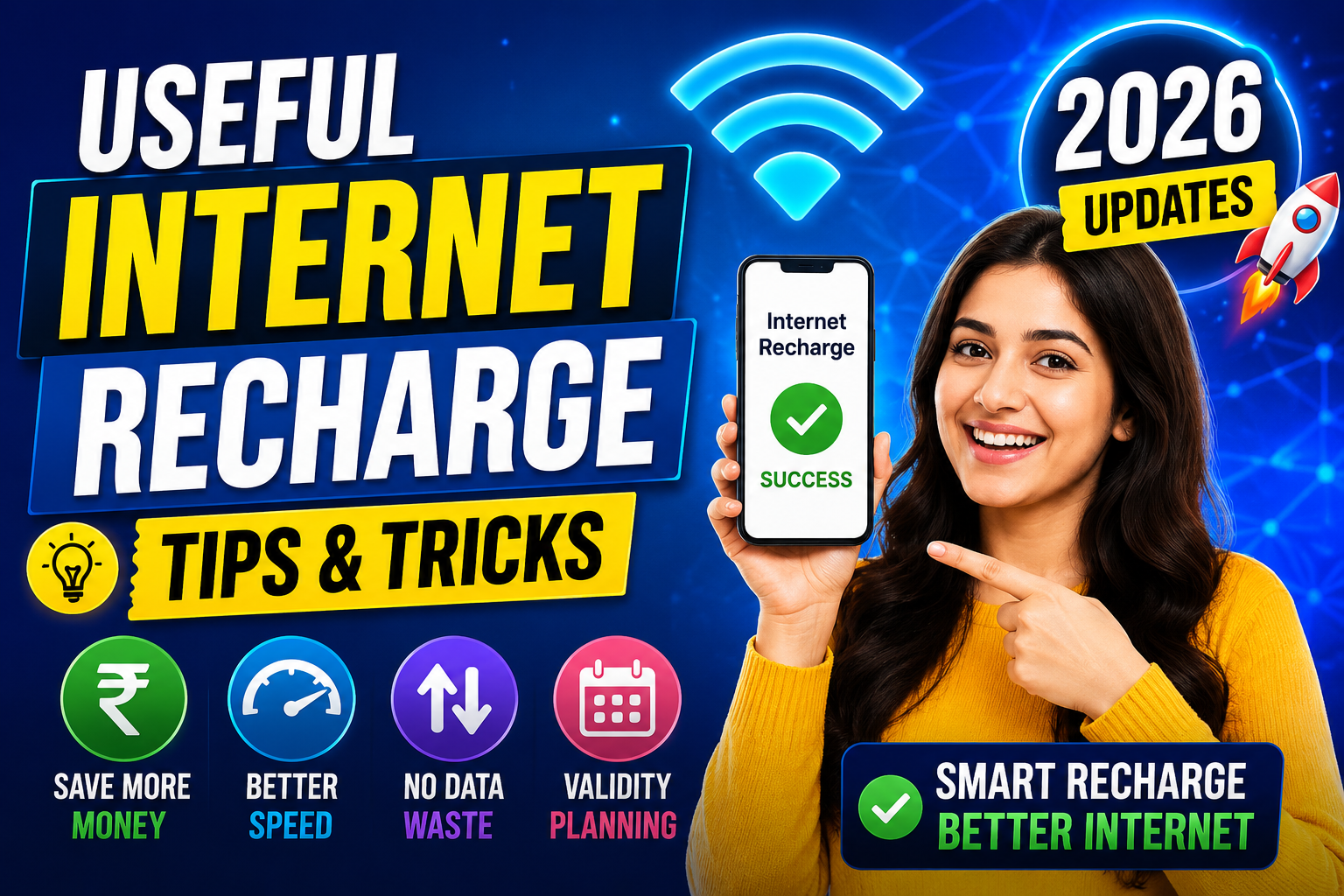
Hello friends, today we are going to look at some very practical internet recharge tips that actually save money and reduce last minute stress. Many users still buy whatever data pack the operator suggests, then wonder why their balance vanishes in a week. This guide focuses on small changes in your recharge habits that can make a clear difference every month.
We will walk through how to choose the right data plan, what has changed in 2026 in terms of validity, fair usage policies and bundled apps, and how to avoid the most common recharge mistakes. If you keep running out of data or always end up paying for emergency top ups, this article is written for you.
The tips here are useful for prepaid and postpaid users, especially people who rely on mobile data for work from home, online classes, short videos, or gaming. You will see real world examples like a student setup and a remote worker setup, so you can match your own usage instead of guessing. The idea is simple, understand your pattern, then align your plan to it.
As we move into 2026, operators in many countries are pushing app based recharges, auto pay, and combined mobile plus broadband bundles. These are convenient but sometimes hide conditions in small text, for example speed drops, streaming caps, or app specific limits. We will highlight those changes so you can recharge confidently without depending only on promotional banners.
Airtel Thanks App – Emergency Data Methods
Method 1: Check in Airtel Thanks App
- Open Airtel Thanks App.
- Go to Discover, Manage Services, or Offers.
- Look for options such as Data Loan, Data Advance, or Special Offers.
- If eligible, you can activate the available emergency data option.
Method 2: Use Dial Pad Codes
- Dial
*121# - Dial
*141# - Navigate through the menu to check for data loan or emergency offers.
Method 3: Check Special Offers
- Open the app and look under Rewards or Recommended Packs.
- Airtel occasionally provides complimentary or discounted data packs to eligible users.
Method 4: Contact Support
- Visit Airtel Support for the latest options.
MyJio App – Emergency Data Methods
Method 1: Check in MyJio App
- Open MyJio App.
- Go to Mobile → Plans → Data Booster.
- Check if any promotional or complimentary data is available.
Method 2: Data Loan Availability
- Jio does not generally provide a standard prepaid data loan feature.
- However, eligible users may occasionally see temporary offers inside the app.
Method 3: Jio Emergency Talktime
- If your balance is low, some accounts may receive limited emergency credit.
- Check availability in the app under offers and services.
Method 4: Official Help
- Visit Jio Support.
Vi App – Emergency Data Methods
Method 1: Check in Vi App
- Open Vi App.
- Go to Offers, Recharge, or Rewards.
- Look for Data Loan, Data Delight, or special emergency benefits.
Method 2: Vi Data Delight
- Many Vi prepaid plans include Data Delight, which can provide extra data when your daily quota is exhausted.
- Availability depends on your active plan.
Method 3: Dial Pad Codes
- Dial
*199# - Follow the menu to check eligible services and offers.
Method 4: Official Help
- Visit Vi Support.
BSNL Selfcare – Emergency Data Methods
Method 1: Check in BSNL Selfcare
- Open BSNL Selfcare or use the BSNL Selfcare app.
- Check Special Tariff Vouchers and available offers.
Method 2: USSD Codes
- Dial
*123# - Dial
*124# - Review the available balance and offer options.
Method 3: Promotional Offers
- BSNL occasionally provides bonus data for select users and recharge plans.
Method 4: Official Help
- Visit BSNL Official Website.
1. Understand your true monthly data usage first
Before you search for offers, check how much data you actually use. This one step prevents overbuying expensive unlimited plans that you never fully use.
On most Android phones you can open Settings, then Network or Connections, then Data usage, and view monthly data for mobile and Wi Fi. On iOS you can open Settings then Mobile data and scroll to see usage. Reset the counter every billing cycle so the data is meaningful.
Track at least one or two months. If you consistently use around 2 to 3 GB per day, a daily high data pack makes sense. If you use 30 to 40 GB in a whole month, a simple monthly quota plan is often cheaper than a hyped unlimited pack.
2. Key internet recharge changes to notice in 2026
Operators keep tweaking plans, so looking at older screenshots or blog posts can be risky. In 2026 a few trends are visible in many regions, even though exact offers vary by country and carrier.
- More app exclusive discounts for recharges done inside the operator app.
- Unlimited 5G packs with speed caps after a certain daily usage threshold.
- Data rollover only on selected premium plans, not on basic daily plans.
- Bundled OTT or music subscriptions with hidden auto renewal after promo ends.
- Family or multi SIM packs that look expensive but are cheaper per person.
Always check the latest plan grid inside your official operator app or website. Avoid relying on old social posts or third party screenshots that might show expired offers.
3. Compare plan types before every big recharge
Instead of blindly picking the most popular banner, match your habits with the right category of plan. Below is a simple comparison that reflects how most telecoms structure packs in 2026. Exact names and rates change, but the trade offs stay similar.
If you often see your daily limit reset with half the data unused, consider shifting from a daily pack to a monthly quota plan. That one switch can stop silent wastage.
4. Real world examples of smarter recharges
Example 1: College student streaming and gaming
Consider a student who streams video lectures and plays online games at night. On checking data stats, usage shows 3 to 4 GB on weekdays and 6 GB on weekends. A small monthly pack frequently runs out after 20 days, triggering pricey emergency top ups.
Better approach, choose a 2 or 3 month daily high data pack, then add a small booster only during exam weeks when video lectures spike. Also set Wi Fi auto connect in the hostel to shift heavy downloads to Wi Fi, saving mobile data for genuine mobile use.
Example 2: Remote worker using hotspot
Now think of a remote worker who uses mobile hotspot for a laptop. Video calls, file uploads, and screen sharing consume 5 to 8 GB a day on working days, while weekends are light. This person often hits fair usage limit by evening.
In this case a dedicated home broadband or fixed wireless connection is usually cheaper than stacking multiple mobile recharges. If broadband is not possible, combining one unlimited plan with speed cap plus a backup basic SIM for urgent tasks is safer than relying on a single overloaded number.
5. Step by step process before your next internet recharge
Use this quick checklist each time you plan a major recharge or shift to a new plan.
- Open your phone data usage page and note last month usage in GB.
- Split that usage into work or study, video streaming, social media, and hotspot if possible.
- Open the official operator app and shortlist three plans, daily, monthly quota, and unlimited with cap.
- Compare total data, validity, and any bundled apps or subscriptions.
- Check fair usage details, especially speed after limit and hotspot allowances.
- Look for app exclusive coupons but ignore offers from unknown recharge sites.
- Turn on plan expiry alerts in the operator app so you do not fall into expensive base rate data by mistake.
6. Common internet recharge mistakes and how to avoid them
Many users lose money not because the plan is bad, but because of small oversights during recharge and daily use.
- Recharging from random third party apps that add hidden convenience fees and offer weak dispute support.
- Ignoring fine print on bundled streaming offers that auto renew at higher prices after a few months.
- Keeping mobile data always on with automatic app updates, cloud backups, and autoplay videos eating background data.
- Using mobile data for large game updates or 4K video downloads that are better handled on Wi Fi.
Fix these with simple habits. Limit background data for social and shopping apps inside your phone settings. Set app updates to Wi Fi only. Log in to OTT apps and reduce default streaming quality when you are on mobile data.
7. 2026 security and privacy tips for online recharges
More people now recharge directly through apps and UPI type systems. Convenience is good but also creates room for scams. Always double check the official name of the operator or recharge provider before paying.
Avoid links from random SMS or social media messages that promise huge discounts on internet recharges. These are often phishing attempts that mimic real payment pages. Use two factor authentication on your payment apps and keep transaction alerts turned on so you spot any unusual charge quickly.
Conclusion
The most useful internet recharge tips for 2026 are simple, know your actual data pattern, compare plan types carefully, and avoid emotional recharges based only on flashy banners. Once you understand if you are a daily heavy user, a monthly mixed user, or an always online worker, the right plan and add ons become much clearer.
Take ten minutes before your next recharge to check usage statistics, review app exclusive plans, and set alerts for expiry. These small actions reduce surprise deductions, prevent slow speed frustration, and keep your monthly internet cost under control without giving up the comfort of constant connectivity.
FAQ
Which is better, daily data plan or monthly data pack in 2026
If your usage is stable every day, daily plans are fine. If your usage jumps up and down across the month, a monthly quota pack usually wastes less data and gives more freedom.
Is it safe to recharge from third party apps
Well known payment apps are generally safe, but the official operator app or website is still the safest choice. Avoid unknown apps or links that claim unbelievable discounts.
How can I stop my data from finishing too fast
Disable background data for non essential apps, set video quality to medium on mobile data, and move big downloads to Wi Fi. Then choose a plan that matches your realistic daily average.
Do 5G unlimited plans in 2026 really give unlimited high speed
Most so called unlimited plans still have a fair usage limit. After that, speed usually drops a lot. Always read the data cap and post cap speed before you recharge.
Should I use auto recharge or manual recharge
Auto recharge is convenient if you always use the same plan. If your usage changes often, manual recharge gives more control and lets you switch to better offers when they appear.
Thank you for reading. If you found these internet recharge tips useful, stay connected with this blog for more latest tech news, useful apps, AI tools, and practical digital life updates.